Is zirconium a critical mineral? Yes, it is one of 60 minerals on the current US Critical Minerals List.
Zirconium is officially classified as a critical mineral by the United States government, one of 60 minerals on the current Critical Minerals List, flagged specifically for supply chains vulnerable to disruption. For a material that shows up in ceramic glazes as a quiet, unglamorous opacifier, that is a significant shift in how it is being treated at a policy level, and it is worth understanding what the classification actually changes, and what it does not.
Is Zirconium a Critical Mineral? What the Classification Actually Means
The US Geological Survey maintains a list of minerals the government considers essential to the country’s economic and national security, where the supply chain carries real vulnerability to disruption, whether from geographic concentration, processing bottlenecks, or geopolitical risk. Zirconium sits on that list, one of 60 minerals in total. In practice, this designation shapes real policy decisions: which materials get prioritized for domestic investment, which sourcing relationships get formal government backing, and which supply chains get scrutinized for over-dependence on a single country or region.
This is not a symbolic gesture. Critical mineral status has been driving actual trade agreements and investment decisions throughout 2026, most visibly in the wave of bilateral mineral agreements signed around February’s Critical Minerals Ministerial. That summit brought together the US and more than 50 partner countries specifically to commit to more diversified sourcing for minerals on this list, and it resulted in 11 new bilateral agreements signed on the spot, with dozens more already in place or close to completion. Zirconium’s inclusion on the list means it sits inside that same policy machinery, even though it rarely gets the attention that headline minerals like lithium or rare earths receive.
What this means in practice, and what it does not
| What critical mineral status means | What it does not mean |
|---|---|
| The US government has formally identified zirconium as essential to its economy or national security, with a supply chain vulnerable to disruption | It does not mean zirconium is rare in absolute terms, or that every source of it is equally reliable |
| It signals policy attention: incentives, stockpiling programs, and trade agreements increasingly get built around this list | It does not automatically change pricing or availability overnight, the effects tend to show up gradually, through policy and sourcing decisions |
| It is a genuine signal that buyers and governments are thinking harder about where their supply actually comes from | It is not a guarantee of a specific price movement or supply shortage, those depend on many other factors |
Where zirconium actually shows up
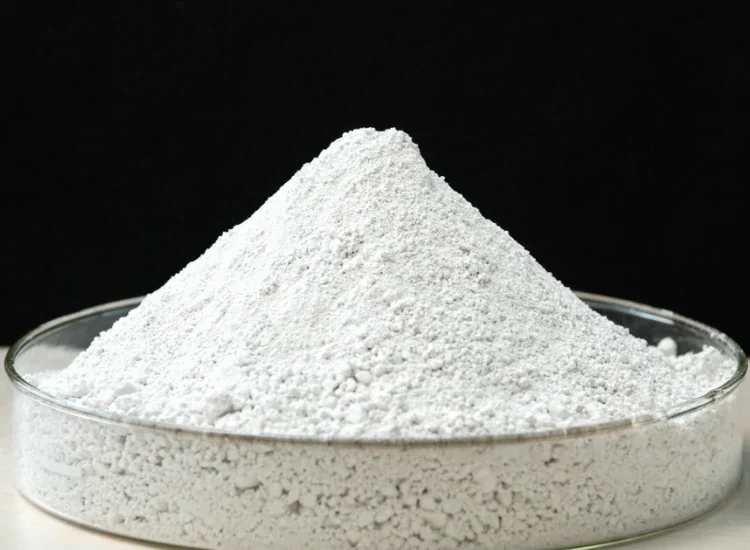
In our own catalog, zirconium is supplied as zirconium silicate, used as an opacifier in ceramic glazes. It is what gives tile and sanitaryware surfaces their bright, uniform white finish, blocking light transmission through the glaze rather than letting it pass through to a translucent or inconsistent result, and it adds real chemical and abrasion resistance to the fired surface, properties that matter for how well a glaze holds up under years of cleaning and everyday wear. It is usually the last ingredient people think to ask about in a tile or sanitaryware formulation conversation, positioned alongside feldspars and clay as part of a complete glaze system rather than sourced on its own.
That quiet, supporting role is exactly why a supply chain classification like this matters more than it might first appear. Buyers rarely think about sourcing risk for an ingredient that is not the headline material in their formulation, until availability or pricing on that ingredient shifts and the whole formulation is affected. A tile body can be otherwise perfect and still fail to meet spec if the glaze opacifier is unavailable or substituted without proper testing.
What buyers should actually do with this information
- Ask your current supplier directly where their zirconium material is sourced from, and whether they have visibility into that supply chain beyond a single point of origin.
- Do not assume a critical mineral classification means an imminent shortage, it does not. It means the material is worth tracking, not panicking over.
- If zirconium is a small but essential part of a larger formulation, treat sourcing continuity for it with the same seriousness as the headline materials in that formulation, a shortage anywhere in the formula stops the whole batch.
- Ask whether your supplier has a documented alternative or backup source, not as a sign of instability, but as a reasonable question for any material now getting this level of policy attention.
Frequently asked questions
Does critical mineral status mean zirconium prices will rise?
Not automatically, and not on any fixed timeline. Critical mineral status shapes policy and investment decisions over time, it is not itself a market event. Price movement depends on actual supply and demand conditions, which are worth monitoring separately.
Is Vulcan’s zirconium supply affected by this classification?
The classification is a US government designation reflecting US supply chain policy. It does not change how we source or supply zirconium silicate. It is relevant context for buyers thinking about their own long-term sourcing resilience, not a signal of any change on our end.
Why would a mineral used only as a glaze ingredient end up on a national critical minerals list?
Critical minerals lists are built around supply chain vulnerability, not just how large a role a material plays in any one product. A material can be a small part of a finished formulation and still carry real supply concentration risk if it is only mined, processed, or refined in a small number of locations globally. That risk profile, not the visibility of the end use, is what drives the classification.
A quiet, supporting ingredient just became part of a much larger global conversation about supply chain resilience. Worth knowing, whether or not it changes anything about how you buy it today.